
This document compiles seven most frequently asked questions raised by clients at the initial stage of swimming pool projects, covering preparation of preliminary information, factors affecting project costs, evaluation criteria for renovations, distinction between partial repairs and full refurbishment, requirements for measurement accuracy, definition of finishes and equipment, as well as site access conditions for construction. The answers below help clients build a basic understanding prior to the first consultation. All content serves only as preliminary assessment; final solutions and quotations are subject to site survey and actual project conditions.
- What information should be prepared for the initial assessment? To conduct an effective assessment, the priority is to allow the contractor to form a basic overview of the project before site visit. We recommend preparing five categories of information in advance: · Site location (city, district and full address, relevant to transportation distance and local approval requirements) · Type of work (new construction, renovation, partial repair or equipment replacement only) · Approximate dimensions (length, width and depth range) · Existing site condition (vacant land, old pool, courtyard renovation, buildings and greenery nearby) · Specific requirements (number of users, frequency of usage, pool heating needs, whether you plan to install a pool heat pump, whether for children or professional training)
If feasible, sending on-site photos via authorized channels will greatly improve assessment accuracy. Photos should cover the overall view, four corners, pool edges, equipment room, power distribution area and access routes. A combination of written description and photos is usually more efficient than lengthy phone calls and reduces repeated confirmation work afterwards.
- Factors affecting quotation for new swimming pool construction The quotation for a new swimming pool cannot be simply calculated by multiplying unit price per square meter. It is determined by multiple variables. Key influencing factors include: · Project size and depth: Pool area determines earthwork volume and material consumption; depth affects structural strength, waterproofing solutions and safety design. · Terrain and geology: Slope, soil type and groundwater level directly influence excavation methods, retaining plans and drainage measures. · Construction access: Availability of equipment entry and adequate space for material storage directly govern machinery selection and labour efficiency. · Equipment configuration: Filtration system, disinfection system (salt chlorination, ozone or UV), circulation pump, pool heating system such as pool heat pump, lighting and automatic control. There is a wide price gap among different grades of configurations. · Decorative finishes: Materials and workmanship such as tiles, mosaics, waterproof liners and concrete coatings vary greatly in price range. · Documentation and approvals: Construction permits, drawing design, structural calculation and acceptance documents are mandatory costs in some regions.
As a result, pools with identical dimensions may end up with vastly different total costs. Assessment requires verification of each item above instead of relying merely on total pool area.
- What data is required for swimming pool renovation assessment? The challenge of renovation lies in hidden components. We recommend providing four types of key information:
- Observed defects: Water leakage, cracks on pool walls, peeling finishes, unstable water quality, excessive noise from pool heat pump or cooling equipment, abnormal energy consumption, etc. More details are preferred.
- Approximate measurements: Pool length, width, depth, water surface area and pool edge elevation for workload estimation.
- Coating and finish status: Type of existing materials (tiles, mosaics, coatings), service life, scope of hollowing or peeling.
- Hydraulic and purification system: Pipeline layout and pipe diameter, model and flow rate of circulation pump, filter type, disinfection method, existing pipeline blockages or leaks, and working status of old swimming pool heat pump.
Please note that the above information only supports preliminary evaluation. Renovation projects normally require on-site inspection of the existing structure, including tapping tests, leakage tests and pipeline pressure tests, to confirm whether the project is cosmetic refurbishment or structural repair.
- Is consultation available for individual repair works? Yes. Preliminary consultation can be for separate repair items or full renovation. Clients are not required to commit to a complete package at the very beginning.
Common individual repair works include partial leakage repair, pool wall crack treatment, partial finish replacement, circulation pump or filter replacement, maintenance or replacement of pool heat pump, lighting fault diagnosis and pipeline modification. Full renovation refers to comprehensive upgrades of pool structure, waterproofing, finishes, hydraulic systems, equipment and supporting facilities.
The final scope of work will be confirmed after reviewing submitted documents and site conditions. For clients, consulting on partial repairs first before deciding whether to expand the scope is a safer and more budget-controllable approach.
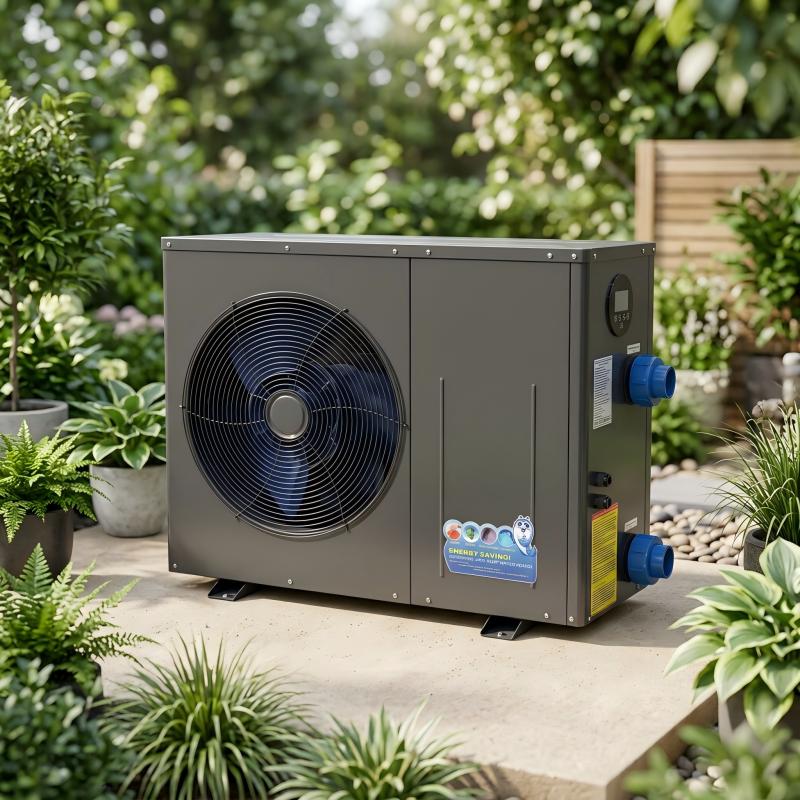
- Are precise measurements required for the first consultation? No. At the preliminary consultation stage, approximate dimensions and clear site description are sufficient to support directional judgement.
Precise measurement is normally completed by professionals on-site during design or formal quotation stage. Requesting precise data from clients prematurely will delay communication. During the first contact, you only need to state the approximate length, width, depth, whether it is a new pool or old pool renovation, and any special usage requirements such as installation of a pool heat pump. The contractor can then evaluate feasibility, required equipment type and estimated construction period.
- How to separately define finishing materials and equipment? Finishes and equipment must be identified separately; otherwise the project scope will become ambiguous and quotations hard to compare.
Finishes include internal pool waterproofing layer, tiles or mosaics, pool coping, pool wall coatings, decorative inlays, etc. Items to confirm: material type, brand grade, tiling workmanship, material wastage rate and construction schedule.
Equipment includes circulation pump, filter, disinfection system, pool heat pump for water heating, lighting, control cabinet, automation and remote monitoring. Items to confirm: brand, model, power, energy efficiency, installation location and after-sales terms.
Both parts will be verified separately during assessment: finishes are checked for existing condition and constructability, while equipment is checked for availability, installation conditions and operating status. Separate definition helps clients clearly understand whether the investment goes to “appearance and waterproofing” or “performance and energy consumption”, and facilitates phased implementation in the future.
- Why is construction site access so important? Site access may seem trivial, yet it directly impacts three key areas: project planning, mechanical equipment selection and construction scheduling. · Planning: Access width determines whether mini excavators can be deployed or excavation has to be done manually; turning radius decides whether delivery trucks can approach the site. · Equipment: When large equipment (such as hoisted materials, prefabricated pool sections, heavy filter tanks or large-capacity pool heat pump units) cannot enter the site, materials have to be disassembled for transportation or smaller machinery adopted, leading to higher costs and longer construction time. · Construction duration & safety: Narrow access, uneven ground, steep slopes, steps or indoor crossing will reduce material handling efficiency and raise risks for cross-operation.
Therefore, if the site has constraints such as narrow passage, damaged pavement, height/width limits, no parking space or reliance on neighbours’ land for access, it is best to state these clearly in the first communication. Early disclosure can prevent forced changes to the project after confirmation and ensure quotations reflect real execution costs.
Conclusion
The seven questions above cover core stages of pool projects: from defining your requirements to assessing feasibility and budget. We recommend clients prepare information following the sequence: site – work type – dimensions – existing condition – requirements – photos at the first contact, and describe access constraints and equipment needs such as pool heat pump installation in detail. Based on the submitted information, contractors provide preliminary proposals, and finalize scope, workmanship and budget via site surveys. The larger and deeper the renovation, the more complete the preliminary information, and fewer modifications and disputes will occur later in the project.
Post time: Nov-10-2026