
Global Pool Heat Pump Industry White Paper (2026–2031)
Chapter 2 – Global Market Overview
2.1 Industry Definition
The swimming pool heat pump industry is a specialized segment within the global HVAC (Heating, Ventilation and Air Conditioning) market. Unlike residential space heating heat pumps or domestic hot water systems, pool heat pumps are designed to maintain swimming pool water temperatures efficiently over extended periods.
Their primary applications include:
Residential Pools
- Private villas
- Luxury homes
- Apartment communities
- Holiday residences
Commercial Pools
- Hotels
- Resorts
- Water parks
- Public swimming pools
- Sports centers
- Schools
- Therapy pools
Pool heat pumps differ from conventional air-source heat pumps in several important ways:
| Item | Residential Heat Pump | Pool Heat Pump |
|---|---|---|
| Heating Medium | Indoor air | Pool water |
| Water Temperature | 35–60°C | 26–32°C |
| Heat Exchanger | Plate heat exchanger | Titanium tube or coaxial heat exchanger |
| Corrosion Resistance | Moderate | Very high |
| Operating Season | Winter dominant | Spring–Autumn (many regions) |
| Installation Environment | Building | Outdoor |
Because pool water contains chlorine, bromine, or salt, corrosion resistance is a defining engineering requirement. Titanium heat exchangers have therefore become the industry standard.
2.2 Global Market Size
Different research organizations report different market values because they use different definitions. Some include only dedicated pool heat pumps, while others combine them with broader swimming pool heating equipment.
For strategic planning, the most useful approach is to consider a realistic range rather than a single number.
| Year | Estimated Global Market (USD) | Estimated Annual Growth |
|---|---|---|
| 2020 | 1.5–1.8 billion | — |
| 2021 | 2.0–2.3 billion | Strong rebound |
| 2022 | 2.6–3.0 billion | Rapid growth |
| 2023 | 3.0–3.6 billion | Continued expansion |
| 2024 | 3.3–3.9 billion | Moderate growth |
| 2025 | 3.6–4.3 billion | Stable expansion |
| 2030 (forecast) | 5.5–7.0 billion | CAGR approximately 8–10% |
The wide range reflects differences in methodology, but nearly all industry sources agree on two points:
- Long-term demand remains positive.
- Heat pumps are steadily replacing less efficient pool heating technologies.
2.3 Market Evolution
The industry’s development can be divided into five distinct phases.
Phase One: Early Adoption (before 2005)
Pool heat pumps were primarily sold in:
- Australia
- France
- Southern Europe
Products were characterized by:
- Fixed-speed compressors
- Mechanical thermostats
- R22 refrigerant
- Limited production scale
Manufacturing costs were high, and relatively few companies participated.
Phase Two: Manufacturing Expansion (2005–2012)
Chinese manufacturers rapidly increased production capacity.
European brands increasingly adopted OEM manufacturing.
Titanium heat exchangers became mainstream.
Digital control systems replaced mechanical controllers.
Production efficiency improved dramatically.
Phase Three: Technology Upgrading (2013–2019)
Competition shifted toward performance rather than simply price.
Major technological advances included:
- DC inverter compressors
- Electronic expansion valves
- Brushless DC fan motors
- Wi-Fi connectivity
- Intelligent defrost algorithms
- Noise reduction
- Higher seasonal efficiency
Consumers became increasingly willing to pay more for lower operating costs and quieter products.
Phase Four: Pandemic Expansion (2020–2023)
The COVID-19 period created an unexpected surge in demand.
Several structural factors contributed:
Homeowners invested in private swimming pools.
International travel restrictions increased domestic leisure spending.
Hotels upgraded energy-efficient facilities.
European electricity prices rose sharply.
Governments encouraged electrification and energy-saving technologies.
Manufacturers experienced record production volumes.
However, this period also exposed supply-chain weaknesses.
Copper prices increased.
Compressor availability tightened.
Electronic components became difficult to source.
Freight costs reached historic highs.
Despite these challenges, the industry achieved record revenues.
Phase Five: Market Normalization (2024 onward)
The market has now entered a more mature stage.
Future growth will rely on:
- Replacement demand
- Technology upgrades
- Environmental regulations
- Geographic expansion
Rather than explosive expansion, sustainable growth is expected.
2.4 Global Market Structure
The market is dominated by three major regions.
Europe
Europe remains the largest value market.
Key countries include:
- France
- Spain
- Italy
- Germany
- Portugal
Characteristics:
High electricity prices encourage efficient heating.
Consumers prefer inverter products.
Environmental regulations favor heat pumps.
Premium brands command higher selling prices.
North America
The United States represents one of the world’s largest installed swimming pool bases.
However, heating preferences vary by climate.
Florida
Texas
Arizona
California
account for significant demand.
Gas heating remains common in some regions, but heat pumps continue gaining market share because of lower operating costs.
Asia-Pacific
Australia has one of the world’s highest penetration rates.
Growing markets include:
China
Japan
South Korea
Thailand
Vietnam
Luxury residential developments are driving new demand.
2.5 Emerging Markets
The next decade will increasingly depend on emerging economies.
Important growth regions include:
Middle East
Latin America
Southeast Asia
Eastern Europe
South Africa
These markets currently have relatively low penetration rates but strong long-term potential.
2.6 Demand Drivers
Several independent factors support long-term industry growth.
Rising Energy Prices
Operating cost has become the primary purchasing consideration.
Compared with electric resistance heaters, pool heat pumps can reduce electricity consumption by approximately 70–80% under favorable conditions.
This significantly lowers the lifetime cost of pool ownership.
Environmental Regulations
Many governments are encouraging:
Lower greenhouse gas emissions
Higher appliance efficiency
Electrification of heating
Reduced fossil fuel dependence
Heat pumps align well with these objectives.
Tourism Industry
Hotels increasingly maintain heated pools throughout the year.
This improves occupancy rates and customer satisfaction.
As tourism expands in many regions, commercial demand continues to grow.
Smart Homes
Consumers increasingly expect:
Wi-Fi control
Mobile applications
Remote monitoring
Integration with smart-home ecosystems
Manufacturers have responded by adding cloud-connected controllers and intelligent scheduling functions.
2.7 Supply Chain Structure
The global pool heat pump industry has become highly integrated.
A simplified value chain is:
Raw Materials
↓
Component Suppliers
↓
Heat Pump Manufacturers
↓
OEM Customers
↓
Importers
↓
Distributors
↓
Installers
↓
Pool Builders
↓
End Users
China currently occupies the central manufacturing position because it combines:
- A comprehensive supplier ecosystem.
- Competitive labor and engineering costs.
- Mature OEM experience.
- Large-scale production capacity.
- Strong export logistics.
2.8 Market Segmentation
The industry can be segmented by product type.
Fixed-Speed Models
Advantages:
Lower purchase price
Simple controls
Suitable for budget markets
Disadvantages:
Higher operating costs
Greater noise
Lower seasonal efficiency
Full DC Inverter Models
Advantages:
Lower electricity consumption
Quiet operation
Improved temperature stability
Longer compressor life
Higher efficiency
These products are becoming the preferred choice in developed markets.
2.9 Competitive Landscape
The market can be divided into four categories.
Premium Brands
Focus on:
Engineering
Reliability
After-sales service
Examples include established European and Australian manufacturers that position themselves at the high end of the market.
Chinese OEM Manufacturers
Strengths:
Competitive pricing
Flexible production
Large manufacturing capacity
Private-label experience
Many global brands source products from Chinese OEM factories while marketing them under their own names.
Regional Distributors
These companies typically do not manufacture equipment but provide:
Local inventory
Technical support
Warranty service
Installer training
Online Retailers
E-commerce continues expanding, especially for residential products.
However, installation and after-sales service remain critical, so traditional distribution channels continue to play an important role.
2.10 Key Industry Challenges
Despite positive long-term fundamentals, the industry faces several structural challenges:
Raw Material Volatility: Copper, titanium, compressors, semiconductors, and refrigerants remain subject to price fluctuations, directly affecting manufacturing costs.
Trade and Tariffs: Changes in import duties, anti-dumping measures, and regional trade policies can alter sourcing decisions and landed costs.
Environmental Compliance: The transition toward lower-global-warming-potential refrigerants (such as R290) requires redesign of products, safety considerations, and certification investment.
Intensifying Competition: As inverter technology becomes standard, differentiation increasingly depends on reliability, software, user experience, and after-sales support rather than basic hardware.
Seasonality: Demand remains highly seasonal in many regions, creating production planning and inventory challenges for manufacturers and distributors.
Chapter Summary
The global pool heat pump industry has evolved from a niche market into a mature international sector with strong long-term growth prospects. Demand is being driven by energy efficiency, environmental regulation, replacement of older heating systems, and expansion in emerging markets.
China has established itself as the world’s leading manufacturing base through its integrated supply chain, engineering capabilities, and OEM expertise. At the same time, competition is shifting away from purely price-based strategies toward technology, product quality, reliability, and customer support.
Looking ahead, manufacturers that successfully manage raw material costs, invest in inverter technology and environmentally compliant refrigerants, and build strong international distribution networks are likely to strengthen their competitive position over the next decade.
About SolarShine:
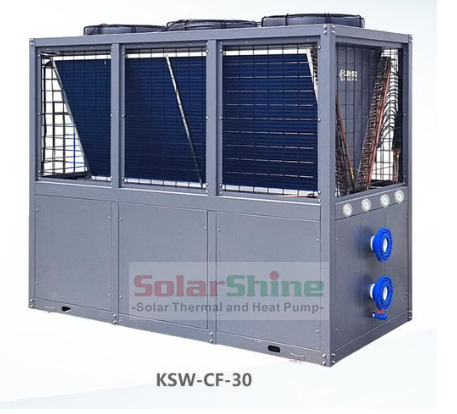
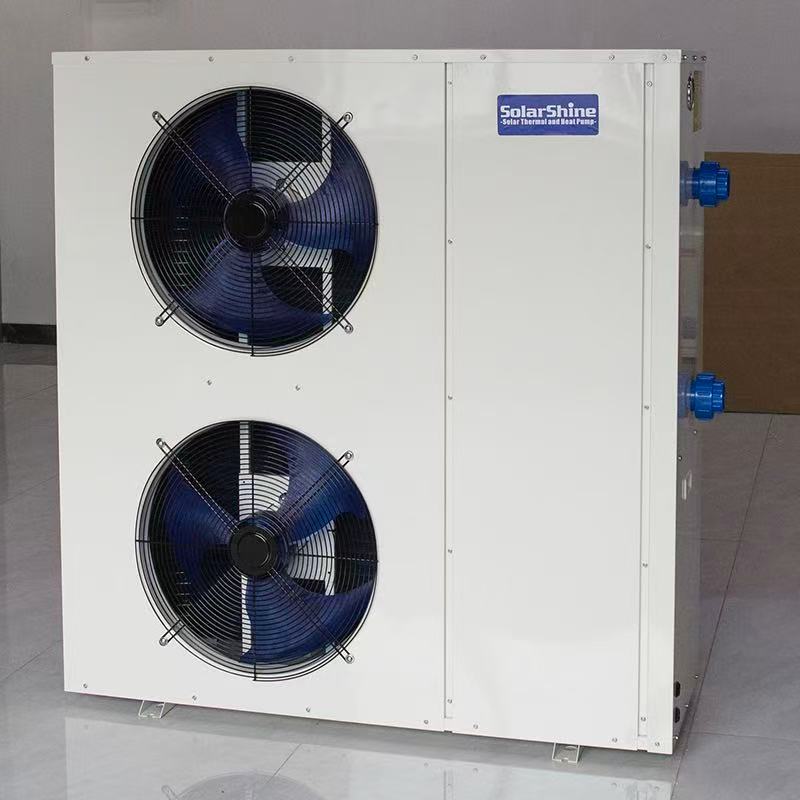
We produce heat pumps for more than 16 years, has rich experience in this field, our products include swimming pool heat pumps, domestic heat pumps, commercial heat pumps and heat pump type chillers, OEM service is available, welcome to contact us for more details.
Post time: Aug-31-2026